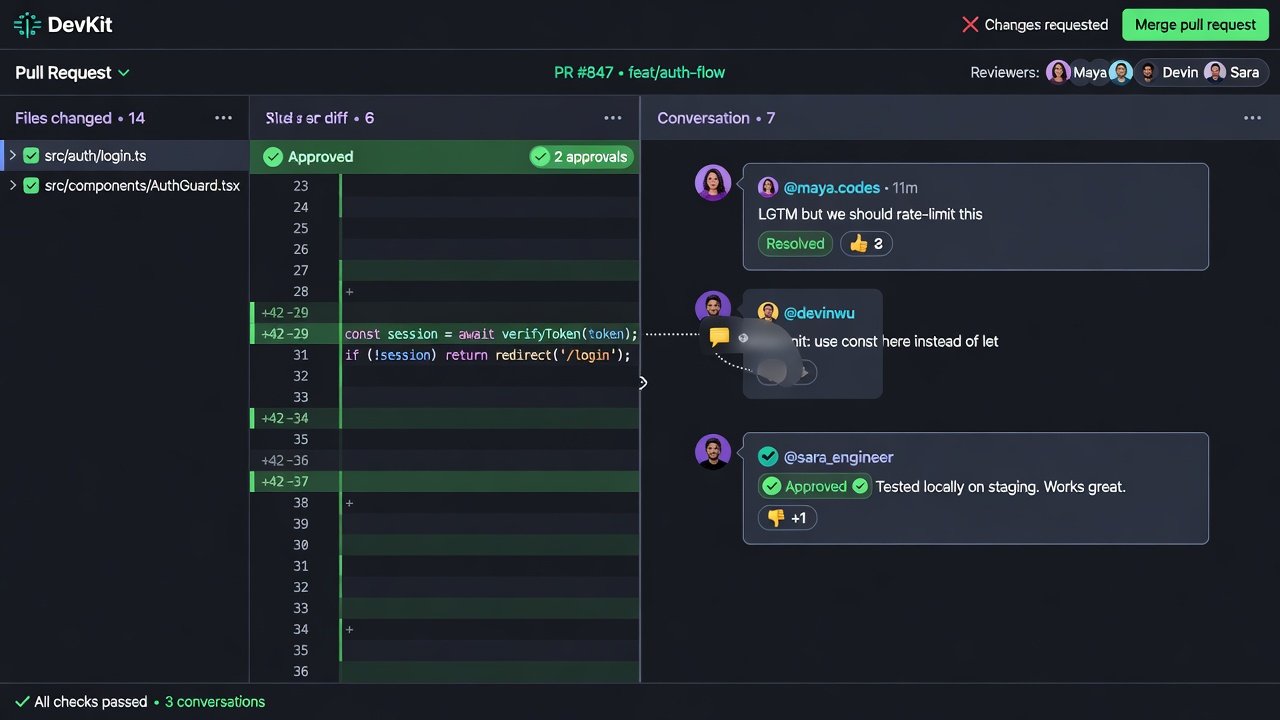
HTML formatting and minification serve opposite purposes: formatting makes HTML readable for developers, minification makes it smaller for browsers. The key is automating both in your build pipeline so you never have to choose manually.
Build Pipeline Automation
During development, use your IDE's built-in formatter or a browser-based HTML formatter. In production, minify HTML at build time using tools like html-minifier-terser. Minification removes whitespace, comments, and redundant attributes, typically reducing file size by 15-30%. Combine with gzip compression for maximum savings. Never minify manually — always automate it in your build process.
Why This Matters in 2026
HTML is the foundation of the web, yet many developers take it for granted. In 2026, with AI tools generating HTML at scale, understanding proper HTML structure, semantics, and formatting is more important than ever. AI-generated HTML often looks correct but breaks in real browsers due to unclosed tags, invalid nesting, and missing accessibility attributes. Proper HTML formatting and validation catches these issues before they reach users.
Key Takeaways
- Always use semantic HTML elements — header, nav, main, section, article, footer
- Format HTML during development, minify for production via build tools
- Validate the document outline — check doctype, head, body, and container flow
- Never nest interactive elements — no links inside buttons or vice versa
- Include descriptive alt text for all images for accessibility
- Use proper heading hierarchy — do not skip heading levels
Common Mistakes to Avoid
- Nesting interactive elements like buttons inside links — invalid HTML
- Using div for everything instead of semantic elements like nav, main, article
- Skipping heading levels (h1 to h3) — breaks the document outline for screen readers
- Missing alt text on images — accessibility violation and SEO penalty
- Not closing tags properly, relying on browser error-recovery
- Using inline styles instead of CSS classes — unmaintainable code
Warning
AI-generated HTML often contains structural errors that browsers silently fix. The rendered output may look correct, but the DOM structure is not what you intended. Always validate AI-generated HTML before shipping.
Best Practices
- Use semantic HTML5 elements for structure and accessibility
- Format HTML with 2-space indentation during development
- Minify HTML at build time using html-minifier-terser or Vite
- Validate with the W3C validator before deploying to production
- Test with keyboard navigation and screen readers for accessibility
- Use ARIA attributes only when semantic HTML does not suffice
Tip
Run your HTML through the W3C validator regularly. It catches structural issues that browsers silently fix but that cause inconsistent behavior across browsers and break accessibility tools.
Quick Reference
Here is a quick reference for semantic HTML structure and common formatting patterns:
<!-- Semantic HTML5 document structure -->
<!DOCTYPE html>
<html lang="en">
<head>
  <meta charset="UTF-8">
  <meta name="viewport" content="width=device-width, initial-scale=1.0">
  <title>Page Title</title>
</head>
<body>
  <header>
    <nav><!-- Navigation --></nav>
  </header>
  <main>
    <article>
      <h1>Article Title</h1>
      <section>
        <h2>Section Heading</h2>
        <p>Content paragraph.</p>
      </section>
    </article>
  </main>
  <footer><!-- Footer content --></footer>
</body>
</html>
Real-World Example
A practical example: converting a design mockup into semantic, accessible HTML. This structure works for blog posts, landing pages, and documentation sites:
<article>
  <header>
    <h1>Getting Started with DevKit</h1>
    <time datetime="2026-08-06">August 6, 2026</time>
  </header>
  <section aria-label="Introduction">
    <p>DevKit is a collection of free, browser-based developer tools.</p>
  </section>
  <section aria-label="Features">
    <h2>Features</h2>
    <ul>
      <li>JSON formatting and validation</li>
      <li>Base64 encoding and decoding</li>
      <li>JWT token inspection</li>
    </ul>
  </section>
  <footer>
    <p>Written by the DevKit Team</p>
  </footer>
</article>
Tools and Resources
- DevKit HTML Formatter — beautify HTML with proper indentation
- DevKit HTML Minifier — reduce HTML file size for production
- DevKit Markdown to HTML — convert Markdown to clean, semantic HTML
- W3C Markup Validator — validate HTML structure and compliance
- Lighthouse — audit HTML for accessibility, SEO, and best practices
"The web is the most powerful platform ever built. HTML is its foundation. Respect the foundation."
HTML is the foundation of every web page, and writing it correctly matters more than ever in the AI era. Use semantic elements, maintain proper heading hierarchy, validate before deploying, and never trust AI-generated HTML without review. Good HTML is accessible, maintainable, and performant.